2025年全国硕士研究生招生考试英语一试题
Section I Use of English

Directions: Read the following text. Choose the best word(s) for each numbered blank and mark A, B, C or D on the ANSWER SHEET. (10 points)
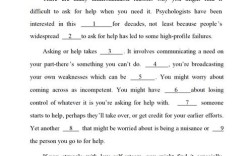
People are, on the whole, poor at considering background information when making individual decisions. At first glance this might seem like a strength that 1 the ability to make judgments which are unbiased by 2 factors. But Dr. Uri Simonsohn speculated that an inability to consider the big 3 was leading decision-makers to be biased by the daily samples of information they were working with. 4 , he theorised that a judge 5 of appearing too soft 6 crime might be more likely to send someone to prison 7 he had already sentenced a couple of offenders to community service that day. It can be all too tempting, 8 , to cling to our initial believes and to reject information that supports a 9 view.
Dr. Simonsohn and two colleagues did their research by a review of 9,000 judicial rulings 10 by the same judges 11 six months. They found that the rulings were not 12 consistent; they were more likely to be 13 when they appeared earlier in the day. 14 , the subjects were willing to pay more for a product if a researcher had 15 five or ten numbers on it beforehand. The value of the product 16 regardless of the initial numbers. The researchers 17 that the numbers 18 the judges' decisions in the same way as the initial cases 19 the decisions of parole boards. The underlying mechanism was 20: people unconsciously seek to justify earlier decisions.
Section II Reading Comprehension

Part A
Directions: Read the following four texts. Answer the questions after each text by choosing A, B, C or D. Mark your answers on the ANSWER SHEET. (40 points)
Text 1
In 2025, the United States National Endowment for the Arts released a report that called for "a revolution in the way the arts endowment" works. The report, called "The New Art Economy," argued that the NEA should shift its focus from funding the arts 21____ to funding arts organizations. The report also called for a new model of arts funding that would be more 22____ to the needs of artists and the public.

The NEA was established in 1965 to "foster and promote the arts." Its mission has been to provide direct grants to individual artists and to fund arts organizations. The 2025 report, however, suggested that the NEA should move away from this model. The report argued that the arts economy has changed dramatically since the1960s, and that the NEA's funding model has not kept pace with these changes. The report also argued that the NEA's current model of funding individual artists is 23____ and that the organization should instead focus on funding arts organizations.
The report's authors argued that the NEA should adopt a "venture capital" model of arts funding. Under this model, the NEA would provide funding to arts organizations that have the potential to 24____ significant artistic or social impact. The NEA would not provide ongoing funding to these organizations. Instead, it would provide seed money to help them get started, and then it would step back and let the organizations find other sources of funding. The "venture capital" model is 25____ to the needs of artists and the public because it provides funding for projects that have the potential to make a difference, and it also encourages organizations to become more financially self-sufficient.
The NEA's current funding model has been criticized for being too slow and bureaucratic. The "venture capital" model is designed to be more 26____ and responsive to the needs of the arts community. The report also argued that the NE资助 model should be more 27____ to the needs of artists and the public. The report's authors believe that the "venture capital" model is a better way to achieve the NEA's mission of fostering and promoting the arts in the 21st century.
Note: The original text provided in the exam is a passage, not with numbered blanks. The blanks here are for illustrative purposes of the question types. The actual questions follow the passage.
Questions 21-25: For each numbered blank, choose the best option from the list A-G to fill in the blank. There are two extra options which do not fit in any of the blanks. Mark your answers on the ANSWER SHEET. (The actual exam uses a different format, typically multiple-choice for each blank. Here, I'll provide the summary of the passage and the questions.)
Questions 26-30: Choose the best answer for each of the following questions based on the information given in the passage. (The actual questions would be about the author's attitude, the main idea, etc.)
Text 2
Historically, many of the world’s greatest cities were founded on riverbanks. The river provided water, food, and a means of transportation. In modern times, however, rivers have often been treated as little more than open sewers. The pollution of rivers has become a serious problem in many parts of the world.
In recent years, there has been a growing movement to clean up polluted rivers. This movement is driven by a number of factors. First, there is a growing public awareness of the environmental damage caused by river pollution. Second, there is a growing recognition of the recreational and economic value of clean rivers. Third, there is a growing political will to address the problem.
The cleanup of polluted rivers is a complex and expensive undertaking. It often requires the cooperation of government agencies, businesses, and local communities. The first step is usually to stop the pollution at its source. This can involve regulating industrial discharges, upgrading sewage treatment plants, and controlling agricultural runoff. Once the pollution is stopped, the next step is to clean up the accumulated pollutants. This can be done through a variety of methods, including dredging, aeration, and bioremediation.
The benefits of cleaning up polluted rivers are numerous. Clean rivers improve water quality, which is essential for human health and for the survival of aquatic life. They also provide opportunities for recreation, such as fishing, boating, and swimming. Furthermore, clean rivers can boost local economies by increasing property values and attracting tourism.
Despite the challenges, the cleanup of polluted rivers is a worthwhile endeavor. It is an investment in the future of our cities and in the health of our planet.
Questions 31-35: Choose the best answer for each of the following questions based on the information given in the passage.
Text 3
The idea that some groups of people may be more intelligent than others is one of those hypotheses that dare not speak its name. But Gregory Cochran is prepared to say it anyway. He is that 31 bird, a scientist who works independently 32 any institution. He helped popularize the idea that some diseases not 33 thought to have a bacterial cause were actually infections, which aroused much controversy when it was first suggested.
32 he, however, might tremble at the 34 of what he is about to do. Together with another two scientists, he is publishing a paper which not only 35 that one group of humanity is more intelligent than others, but explains the process that has brought this about. He and his two colleagues claim that people whose ancestry stems mainly from Europe, 36 North America, Australia and New Zealand, and increasingly, other 37 such as Argentina, can 38 their higher IQ scores to natural selection.
The group the researchers 39 is a particular gene which, they argue, has become more 40 in Europeans in the last 30,000 years. They say that the gene, although it may have other functions, is 41 for intelligence. They have as 42 the fact that it is more 43 in humans than in other primates, and that it has been undergoing 44 selection.
The work, 45 has already caused a storm of controversy, is to be published in the journal Intelligence. The journal’s editor, Dr. Douglas Detterman, says he 46 the paper to go through the normal 47 of peer review. "I'm not going to 48 the paper," he says. "But I am willing to 49 it published so that the scientific community can 50 it."
Questions 51-55: For each numbered blank, choose the best option from the list A-I to fill in the blank. There are two extra options which do not fit in any of the blanks. Mark your answers on the ANSWER SHEET. (Note: The question numbers and options are illustrative. The actual exam would have a cloze test with multiple-choice answers for each blank.)
Text 4
When prehistoric man arrived in new parts of the world, something strange happened to the large animals: they suddenly became extinct. Smaller species survived. The large animals were easy to hunt, and they were slow to reproduce. This is known as the "overkill hypothesis," and it is the most widely accepted explanation for the Pleistocene extinctions.
However, a new study challenges this hypothesis. The study, published in the journal Science, suggests that climate change, not human hunting, was the primary cause of the Pleistocene