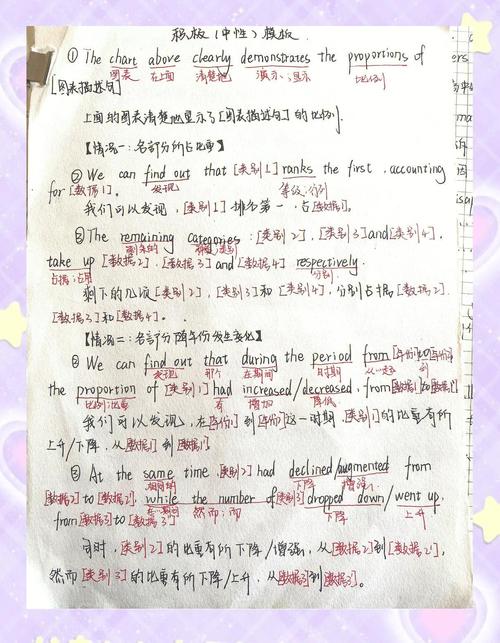
考研英语二小作文万能模板的核心在于掌握不同类型书信的通用结构和高频表达,同时结合具体题目灵活调整内容,确保格式规范、语言得体,以下从通用结构、分类模板、高频短语及注意事项四个方面展开说明,并提供实用范例和FAQs。
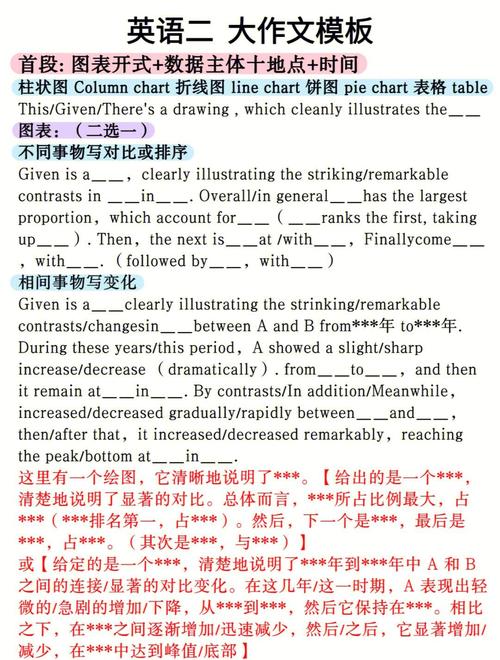
通用结构(适用于所有书信类型)
考研英语二小作文通常包括称呼、正文、结尾和署名四部分,正文建议分3段,每段1-2句话,控制在100词左右。
- 称呼:根据收件人身份确定,若题目未明确,可用“Dear Sir or Madam,”(最通用)或“Dear [收件人称谓],”(如“Dear Mr. Smith,”)。
- 第一段:开门见山,表明写信目的(如建议、投诉、咨询、感谢等),可结合题目背景简要说明。
- 第二段:展开核心内容,分点阐述具体建议、问题细节或感谢理由,用“Firstly, Secondly”等连接词增强逻辑性。
- 第三段:表达期待或再次强调目的,提出请求(如“期待您的回复”)或礼貌结尾(如“感谢您的帮助”)。
- 常用“Sincerely,”或“Yours faithfully,”(若用“Dear Sir or Madam,”),“Best regards,”(若用具体姓名)。
- 署名:题目通常要求用“Li Ming”(假设考生名为李明),若题目未说明,可用“Li Hua”或“Zhang Wei”等常见名字。
分类万能模板及高频短语
(一)建议信(如建议改进图书馆服务、校园设施等)
第一段(表明目的)
I am writing to put forward some suggestions concerning [建议主题,如“the improvement of campus library services”]. As a frequent user of the library, I have noticed several issues that, if addressed, could enhance the user experience.
第二段(具体建议)
Firstly, it would be beneficial to extend the library’s opening hours, especially during weekends and exam periods, to accommodate students’ diverse study schedules. Secondly, introducing more online resources, such as e-books and academic databases, would greatly facilitate students’ research. Additionally, increasing the number of power sockets and comfortable seating areas could solve the problem of limited study space.
第三段(期待回复)
I hope you will take these suggestions into serious consideration. I would be grateful if you could provide feedback on the possible improvements. Thank you for your time and attention.
(二)投诉信(如投诉产品质量、服务态度等)
第一段(表明投诉)
I am writing to express my dissatisfaction with [投诉对象,如“the poor quality of the laptop I purchased from your store on [日期]”]. Despite the product’s attractive appearance, it has multiple defects that have caused me significant inconvenience.
第二段(问题细节)
Firstly, the laptop frequently shuts down automatically within 30 minutes of use, even when fully charged. Secondly, the screen has persistent display issues, with horizontal lines appearing constantly. I contacted the after-sales service twice, but the problem remains unresolved, and the staff’s rude attitude has further aggravated my frustration.
第三段(提出要求)
I request a full refund or a replacement of a new laptop of the same model within seven days. I look forward to your prompt response and a satisfactory solution to this matter.
(三)咨询信(如咨询活动信息、申请流程等)
第一段(表明咨询意图)
I am writing to inquire about [咨询内容,如“the details of the summer volunteer program organized by your university”]. As a student passionate in community service, I am eager to participate but need further clarification on several aspects.
第二段(具体问题)
Firstly, could you please inform me of the application deadline and the required documents? Secondly, what are the specific dates and locations of the volunteer activities? Additionally, is there any prior experience or skill required for applicants? I would also appreciate it if you could provide information on accommodation and transportation during the program.
第三段(期待回复)
Thank you for your assistance. I look forward to your early reply and hope to contribute to the meaningful program.
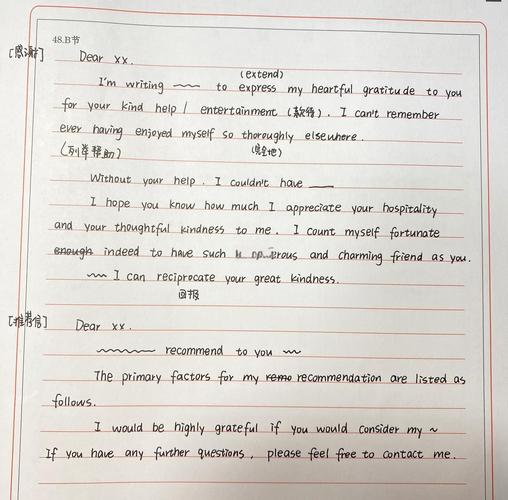
(四)感谢信(如感谢帮助、款待等)
第一段(表明感谢)
I am writing to express my sincere gratitude for [感谢事由,如“your warm hospitality during my visit to your city last week”]. Your thoughtful arrangements and kindness made my trip unforgettable.
第二段(具体细节)
Firstly, the guided tour you arranged for me to visit the local museum was incredibly informative, and I learned a lot about the city’s history. Secondly, the homemade dinner you prepared was not only delicious but also gave me a taste of authentic local cuisine. Your willingness to share your time and culture left a deep impression on me.
第三段(再次感谢)
Once again, thank you for your generosity and kindness. I hope to have the opportunity to reciprocate your hospitality in the near future.
高频万能短语(适用于各类书信)
-
开头句
- I am writing to...(写信目的是……)
- I am writing on behalf of...(我代表……写信)
- The purpose of this letter is to...(本信旨在……)
-
连接词
- Firstly, Secondly, Finally/Lastly(其次,
- In addition/Furthermore/Moreover(
- However/On the contrary(
-
结尾句
- I would be grateful if you could...(若您能……我将不胜感激)
- I look forward to your reply at your earliest convenience.(期待您的尽快回复。)
- Thank you for your time and consideration.(感谢您的时间和考虑。)
注意事项
- 格式规范:首行顶格写称呼,段落空两格,结尾和署名右对齐,避免拼写和语法错误。 具体**:结合题目要求补充细节(如时间、事件、原因),避免空泛表达。
- 语气得体:建议信和感谢信语气礼貌,投诉信语气坚定但避免过激词汇,咨询信语气谦逊。
- 字数控制:小作文建议80-100词,正文分3段,每段1-2句话,避免冗长。
相关问答FAQs
Q1:考研英语二小作文中,如果题目未明确收件人姓名,称呼应该怎么写? 未提供收件人具体姓名,建议使用最通用的称呼“Dear Sir or Madam,”,适用于建议信、投诉信、咨询信等类型,结尾对应使用“Yours faithfully,”;若题目中能推断出收件人为熟人(如同学、朋友),可用“Dear [First Name],”,结尾用“Best regards,”。
Q2:小作文模板是否需要死记硬背?如何避免模板痕迹过重?
A2:模板不必死记硬背,核心是掌握通用结构和高频短语,再结合题目灵活调整内容,建议信的“Firstly, Secondly”可替换为“To begin with, What’s more”,结尾句可根据具体情境修改(如咨询信可改为“Your detailed information would be highly appreciated.”),需结合题目补充个性化细节(如具体问题、事件背景),避免所有答案千篇一律,从而减少模板感。